

We are delighted to announce that the Hydroinformatics Lab of Brigham Young University (BYU), Provo - Utah USA, will be hosting the 2026 Global Flood Partnership (GFP) Annual meeting, August 4 to 6th, 2026.
GFP Annual Meeting: "From Research to Operations: Advancing Global Flood Forecasting and Operational Hydrology"
Registration
This will be an in-person meeting, with limited portions recorded and made available after the meeting. Registration is now closed.
Note: Presenters will be notified soon after June 15 about their presentation type.
Agenda
Tuesday, August 4, 2026:
Morning: Plenary session – keynote speakers
Coffee break and lunch will be provided at the venue
Afternoon: Ignite presentations, market place
Wednesday, August 5, 2026:
Morning: Plenary sessions: Keynote speakers, poster presentations
Coffee break and lunch will be provided at the venue
Afternoon: Break-out session workshops & Field visit if weather allows - including dinner at no cost
Thursday, August 6, 2026 ending just after 3 PM:
Morning: Plenary session: Keynote speakers, break-out session workshops
Coffee break and lunch will be provided at the venue
Afternoon: Panel discussion and closing ceremony
A full agenda will be published soon
Keynote speakers
- Martyn Clark, University of Calgary, Calgary, Canada: Developing actionable water predictions across large geographical domains
- Colin Doyle, Floodbase, USA: Operationalizing Hydrological Data Fusion: Lessons from Disaster Response and Parametric Insurance
- Brandi Downs, Jet Propulsion Laboratory (JPL), Pasadena, California, USA: NISAR and Global Flood Monitoring: New Opportunities from L-Band Radar Observations
- Maggi Glasscoe, University of Colorado Boulder, Boulder, Colorado, USA: Dissemination of global flood information through the Global Initiative for Flood Forecasting and Alerting (GIFFT)
- Angelica Gutierrez, GEOGLOWS, Geneva, Switzerland: Science under water: What We Let Sink
- Nawajish Noman, Esri, Redlands, California, USA: Bridging Research and Operations with a Geospatial Platform
- Adnan Rajib, University of Texas, Arlington, Texas, USA: Transparent Flood Intelligence using Earth Data and AI
- Oleg Zlydenko, Google, Israel: Bridging Research and Operations for Global Urban Flash Flood Early Warning Systems with AI at Google
- Ervin Zsoter, ECMWF, Reading, United Kingdom: Recent improvements in the Global Flood Awareness System
Poster guidelines
Please ensure your poster is printed to fit the display board dimensions: 3 x 2 foot (36 x 24 inches; 90 × 60 cm) poster. No specific poster template is required. You are responsible for displaying your poster according to the scheduled session times and for removing it at the end of the event.
Meeting Venue
Provo is located in the heart of the Intermountain West and is primarily served by the Salt Lake City International Airport (slcairport.com), which offers direct connections to major U.S. and international cities. (Regional domestic flights on American Airlines are also available via the Provo Airport (PVU)).
The meeting will be held on the scenic campus of Brigham Young University, the flagship higher education institution of The Church of Jesus Christ of Latter-day Saints, nestled against the majestic Wasatch Mountains. It is a 70-minute train ride from Salt Lake City via the FrontRunner commuter rail and is well-connected by the I-15 highway. Be aware that visitor parking on the BYU campus is restricted to designated visitor lots. The campus is highly accessible via the high-frequency UVX bus line, which connects directly to downtown hotels and the train station.
Brigham Young University (BYU)
240 Engineering Building (https://engineering.byu.edu/) at https://maps.app.goo.gl/8dWTELWQEzDnrskn9
Provo, UT 84602, USA
Field visit - Olmsted Station Powerhouse
Weather permitting, on Wednesday afternoon we have the unique opportunity to visit the Olmsted Station Powerhouse near Provo. Situated at the mouth of Provo Canyon, the Olmsted Station Powerhouse offers a compelling case study in hydraulic engineering shaped by flood risk. When Colorado mining executive Lucien Nunn sought to expand his pioneering hydroelectric operation in the early 1900s, he originally planned an 80-foot dam across the Provo River, but Utah Valley residents, fearing catastrophic flooding, forced him to limit it to just 16 feet. Engineer Fred Olmsted's solution was elegant: divert the river through a wooden flume hugging the canyon wall, achieving the necessary water head without a tall dam. Opened in 1904 and listed on the National Register of Historic Places, the plant operated for over a century before decommissioning in 2015. Today, a modern replacement facility operated by the Central Utah Water Conservancy District continues the tradition, functioning as a run-of-river plant tightly integrated with the upstream reservoir system, Deer Creek and Jordanelle, that manages Provo River flows and protects Utah Valley from flooding.
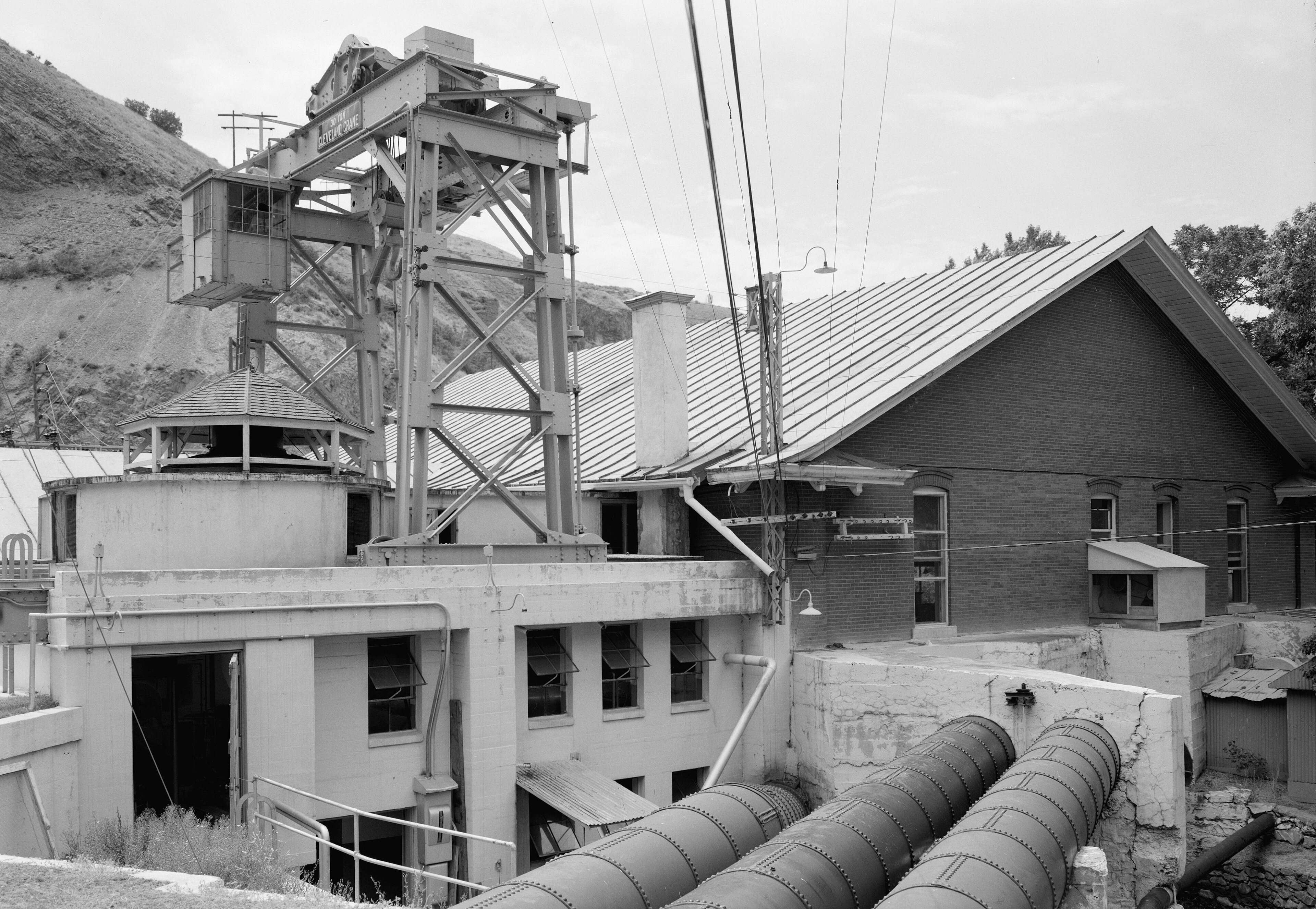
Olmsted Power Station
Lodging recommendations
There are several hotels to choose from with the following recommendations that provide convenient access to public transportation or within walking distance of the university:
- Provo Marriott & Conference Center, 101 W 100 N, Provo, UT 84601
~1.5 miles from campus
Located downtown; sits directly on the UVX line. - Hyatt Place Provo, 180 W 100 N, Provo, UT 84601
~1.5 miles from campus
Modern, includes breakfast, also on the UVX line. - Residence Inn by Marriott, 252 W 2230 N, Provo, UT 84604
~0.5 miles from campus
All-suite hotel; very close to the north end of campus. - SpringHill Suites by Marriott, 1580 N Freedom Blvd, Provo, UT 84604
~0.5 miles from campus
Very close to campus; walkable for most - Best Western Plus University Inn, 1600 N Freedom Blvd, Provo, UT 84604
~0.5 miles from campus
Directly across from the north end of campus

Conference language
English
Sponsors
This meeting is made possible by our generous sponsors:


Brigham Young University (BYU), Engineering

United Nations - Office for Outer Space Affairs - UN-SPIDER

Geospatial and Modelling Intelligence to Manage Flood and Wildfire Risk

- Log in to post comments